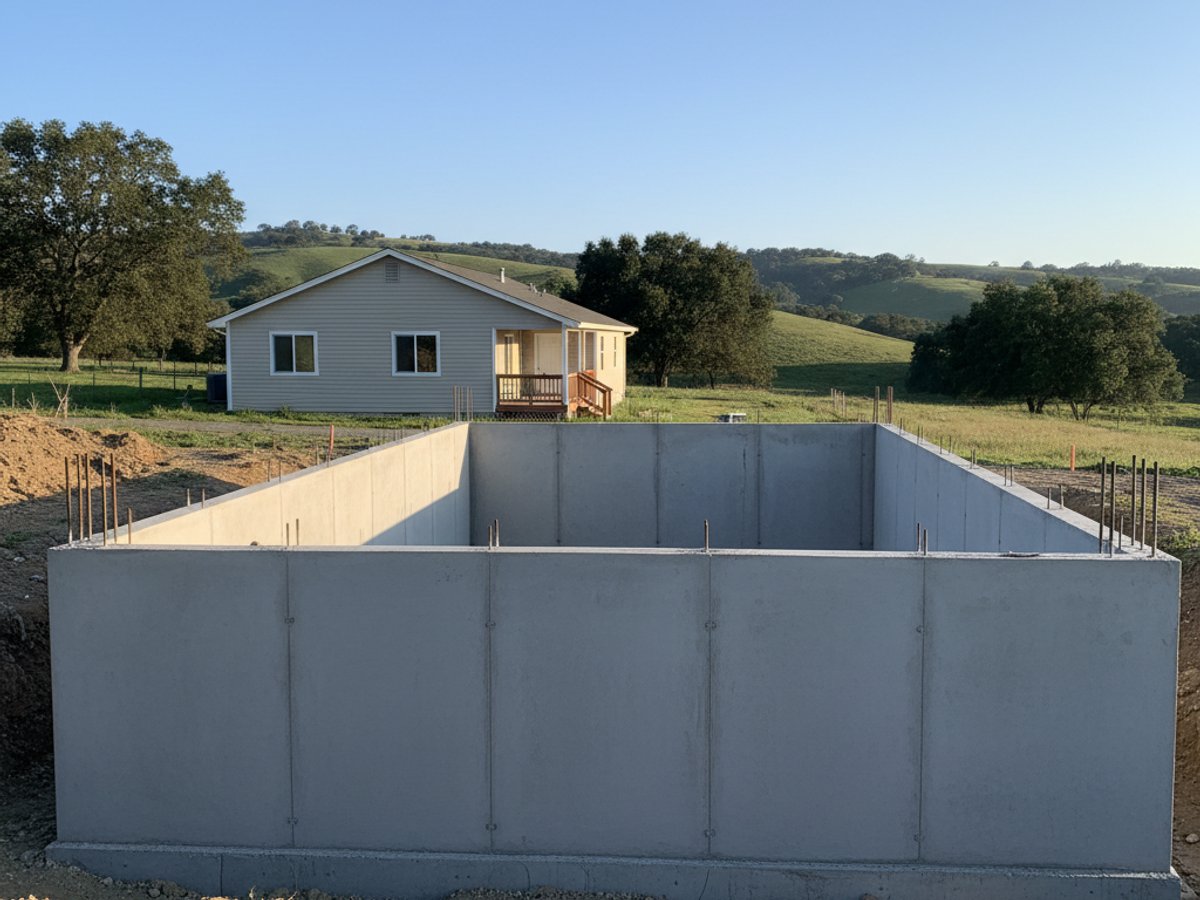
Concrete doesn't care what the calendar says, it cares about moisture and temperature. In Visalia those two things swing hard over the year, and the swing changes how a slab cures, how fast you can finish it, and whether it cracks in the first six months. Spring and fall get most of the good pours around here, but there's more to it than just picking a mild week.
Tulare County sits in the Central Valley, which means hot dry summers, a short cool winter with tule fog, and soil that's often heavy clay or adobe clay once you get past the topsoil. That soil swells when it's wet and shrinks hard when it dries out. A driveway or patio base that isn't compacted right will telegraph that movement straight up through 4 inches of concrete, usually as a crack running corner to corner within the first year or two.
Summer: fast, but you have to fight the clock
June through September in Visalia means highs in the high 90s and often past 105. That's a problem for fresh concrete, not because heat stops it from curing, but because it cures too fast on the surface while the inside is still wet. Water evaporates off the top faster than bleed water can replace it, and you get plastic shrinkage cracks, fine lines across the surface within hours of the pour, sometimes before it's even finished troweling.
We can still pour in July and August, but it means starting at 5 or 6 in the morning so the slab gets its first couple hours before the heat peaks, using an evaporation retardant or fog spray on exposed surfaces, and getting curing compound or wet burlap down fast. Stamped concrete is harder in summer heat because the open time to run the stamps shrinks, sometimes to 20 minutes on a hot slab instead of 45. If a contractor tells you summer pours are no different than any other month, that's not accurate.
Winter: fog, frost, and a slower cure
Visalia winters are mild compared to most of the country, but December and January bring tule fog that can sit on the valley floor for days, keeping humidity high and surfaces damp. Concrete needs to stay above roughly 50 degrees for the first 48 hours to gain strength properly, and a surprise frost night, which does happen here a handful of times a winter, can freeze the surface water before the mix has set up. That weakens the top layer permanently, even if you never see visible damage.
Rain is the bigger issue in a Visalia winter. Most of the county's annual rainfall lands between November and March. A pour that gets rained on before the finish sets will wash out the surface paste and leave it pitted, and a saturated base won't support equipment or hold grade. Good contractors are watching a seven-day forecast, not just the pour day, because rain two days later can still undercut curing if drainage on the lot is poor.
Spring and fall: the real window
April, May, September, and October give you the combination most concrete wants: daytime temps in the 70s and low 80s, overnight lows that don't threaten frost, and less rain than winter without the evaporation rate of July. Cure times are closer to textbook, meaning you can usually walk on a new slab in 24 to 48 hours and drive on a driveway after 7 days, with full design strength at 28 days. In peak summer or a cold snap those numbers shift, sometimes by several days in either direction.
This is also when demand is highest, so if you want a fall pour before the rains start, it's worth calling in July or August rather than waiting until October.
The ground matters more than the season
No matter when you pour, Visalia's clay soil needs the same prep. That means removing organic material and old base down to firm native soil or compacted fill, usually 4 to 6 inches of class II road base under a driveway, compacted in lifts, not just dumped and leveled. Skipping this step is the most common reason a slab cracks or settles unevenly, and it has nothing to do with the weather on pour day. On older lots around downtown Visalia or the Oval Park area, you'll often find old sidewalk sections, buried irrigation pipe, or tree roots from mature street trees that weren't there when a 1940s or 1950s slab went in. Newer subdivisions out toward northeast Visalia or along the Highway 198 corridor usually have more uniform engineered fill, which makes base prep more predictable but doesn't eliminate it.
Permits and timing
The City of Visalia and Tulare County both require permits for most structural concrete work, slabs, foundations, retaining walls over a certain height, and sometimes driveway approaches tied to the street. Inspections typically happen before the pour, checking rebar placement, base depth, and forms, so that step has to be scheduled ahead of the truck, not after. If your property is in an HOA, which is common in some of the newer northeast Visalia developments, you may also need design approval before the city permit even gets pulled. None of that is weather-dependent, but it does affect how far in advance you need to start planning, especially if you're aiming for that narrow spring or fall window everyone else wants too.
If you're trying to time a project around all of this, it helps to talk it through with someone who pours concrete here year-round and knows which months are worth waiting for. That's the kind of planning Spectrum Concrete Solutions walks through with homeowners before a shovel goes in the ground.